

Ottawa’s real estate market remained relatively stable in July as the spring market transitioned into the typically quieter summer months. While overall sales activity was nearly identical to July 2025, fewer new properties came onto the market, helping to improve the balance between buyers and sellers.
The latest numbers from the Ottawa Real Estate Board (OREB) suggest that while buyers continue to have more choice than they have in recent years, the rapid growth in inventory is beginning to moderate. At the same time, market conditions continue to differ considerably depending on the neighbourhood and type of property.
A Relatively Strong July
Ottawa saw 1,325 residential properties change hands in July, virtually unchanged from the 1,322 sales recorded during the same month last year. Sales were down 12.7% from June, but that seasonal decline was considerably smaller than the typical June-to-July drop of 20.7% seen over the previous decade.
That is an encouraging sign that buyer activity has remained relatively resilient as the market moves into summer.
The different property segments told slightly different stories:
- Single-family home sales: 714, up 5.0% year-over-year
- Townhouse sales: 417, down 4.1%
- Apartment sales: 169, down 6.6%
Single-family properties continued to show the strongest demand, while condominium apartments remained the softest segment of the market.
Looking at the year so far, 8,288 homes have sold in Ottawa, representing a 5.2% decline compared with the same period in 2025. That gap has narrowed from 6.1% at the end of June, suggesting that sales activity has been gradually closing the year-over-year difference.
The total dollar volume of residential sales so far this year sits at approximately $5.8 billion, down 5.6% from the same period last year.
Fewer New Listings Help Improve Market Balance
One of the more notable developments in July was the slowdown in new listings.
There were 2,530 new properties listed for sale, a 0.8% decrease compared with July 2025. This was the second time in the past three months that new listings came in below the previous year’s level.
At the same time, the number of active listings stood at 4,678, which is 9.3% higher than last year. However, active inventory was down 6.1% from June.
In other words, buyers still have considerably more homes to choose from than they did a year ago, but the amount of available inventory is no longer growing at the same pace.
This helped push Ottawa’s sales-to-new-listings ratio from 48.8% in June to 52.4% in July. A higher ratio indicates that a greater proportion of newly listed properties are being absorbed by buyers.
Months of inventory increased slightly from 3.3 months in June to 3.5 months in July. While inventory typically increases during this time of year, the July increase was less than half the median increase seen over the previous decade.
The market therefore appears to be moving toward a better balance, although it has not shifted into a broadly tight seller’s market.
Ottawa Home Prices Remain Relatively Stable
Price trends were mixed in July, but the overall picture continues to point toward stability rather than a significant market correction.
The average sale price was $683,308, down 1.6% from July 2025. Meanwhile, the median sale price remained unchanged at $635,000.
The difference between the average and median suggests that the types of homes sold during the month had an influence on the average price.
The MLS® Home Price Index, which helps account for differences in the mix of properties sold, recorded a composite benchmark price of $634,000. That was 0.5% below July 2025 but 0.3% higher than June.
Homes sold for an average of 97.8% of their asking price, compared with 98.0% a year earlier. The median time a property spent on the market also increased, moving from 24 days to 28 days.
For sellers, this continues to emphasize the importance of pricing a property appropriately from the outset. Buyers have options, and properties that are competitively priced and well presented are more likely to attract attention.
Single-Family Homes Continue to Lead the Market
Single-family properties remained the strongest major segment in Ottawa during July.
The benchmark price for single-family homes was 0.6% higher than a year ago, while inventory stood at 3.2 months.
Townhouses also showed relatively healthy absorption, with 3.0 months of inventory and a sales-to-new-listings ratio of 55.9%. However, the townhouse benchmark price was still 5.1% below July 2025.
The condominium apartment market continues to face more challenging conditions.
Apartments had 5.4 months of inventory, considerably higher than the other major property types. The sales-to-new-listings ratio was 41.0%, and the median time on market reached 41 days.
The apartment benchmark price was also 5.2% lower than a year earlier, with downtown Ottawa continuing to experience some of the softest condominium conditions.
For condo buyers, this may create opportunities for negotiation and greater selection. For condo sellers, accurate pricing and strong presentation remain particularly important.
Suburban Markets Continue to Outperform Downtown
Location remains another major factor influencing Ottawa’s real estate market.
More than 70% of Ottawa’s residential sales in July occurred in the suburban markets, where absorption generally remained stronger.
Ottawa Suburb South
Ottawa Suburb South recorded an encouraging month, with sales increasing 8.0% year-over-year while new listings declined 6.6%.
The sales-to-new-listings ratio reached 55.7%, indicating relatively strong absorption of new inventory.
Ottawa Suburb West
Ottawa Suburb West recorded the strongest absorption of the three suburban areas. The region had a 56.2% sales-to-new-listings ratio and just 3.0 months of inventory.
Ottawa Suburb East
Ottawa Suburb East also remained relatively balanced, with a 54.3% sales-to-new-listings ratio and 3.0 months of inventory.
Ottawa Centre
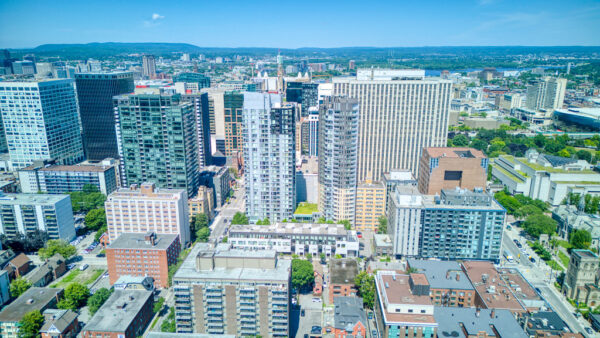
The picture was noticeably different in Ottawa Centre.
Sales were down 8.3% year-over-year, while the sales-to-new-listings ratio was 39.6%. Months of inventory reached 5.6 months, pointing to considerably more supply relative to buyer demand.
Rural areas experienced more varied results. Sales increased in Ottawa Rural South and Ottawa Rural West but declined in Ottawa Rural East. Because these areas have fewer transactions overall, individual sales can have a much larger impact on monthly and annual percentage changes.
The takeaway is clear: Ottawa isn’t one single real estate market. Conditions can vary significantly from one neighbourhood to another, and the type of property being sold can make an equally significant difference.
What Does This Mean for Buyers and Sellers?
For buyers, July’s numbers suggest that there is still a healthy selection of properties available, particularly compared with the tighter conditions experienced in previous years. The slower pace of new listings, however, means buyers shouldn’t necessarily expect inventory to continue increasing indefinitely.
For sellers, the market remains competitive. While there is still demand for well-priced homes, buyers have more options than they have had in recent years. Pricing strategy, property condition and presentation can therefore have a meaningful impact on how quickly a home sells.
The differences between property types are also important. Single-family homes are showing more resilience, while condos — particularly downtown apartments — continue to face greater competition.
Looking Toward the Fall Market
The economic backdrop heading into the fall is somewhat more encouraging than it appeared earlier in the year.
Statistics Canada reported 0.3% growth in real GDP in May, while the Bank of Canada noted in July that there were signs economic growth had resumed during the second quarter. Growth remains modest and uncertainty is still present, but the overall environment appears steadier.
The Bank of Canada also maintained its policy interest rate at 2.25% in July. While broader economic conditions don’t directly determine what happens in Ottawa’s housing market, stable interest rates and improving economic indicators can provide a more supportive environment for housing activity.
Heading into the fall, several factors will be worth watching: the pace of new listings, whether active inventory continues to decline, the strength of buyer absorption and whether the condominium market begins to recover.
July’s numbers provide some encouraging signs. New listings have eased, inventory has come down from June, and sales have held relatively close to last year’s levels. The big question is whether that balance will continue once the summer slowdown ends and the fall market gets underway.
For homeowners, buyers and investors, the overall Ottawa market remains one where local conditions matter. Citywide statistics provide valuable context, but the most useful information comes from looking at the specific neighbourhood, property type and price range you’re considering.
If you’re thinking about buying or selling this fall, understanding what is happening in your particular part of Ottawa can help you make a more informed decision.